Membrane
Membrane
Home - Portfolio - Membrane
Membrane Technology
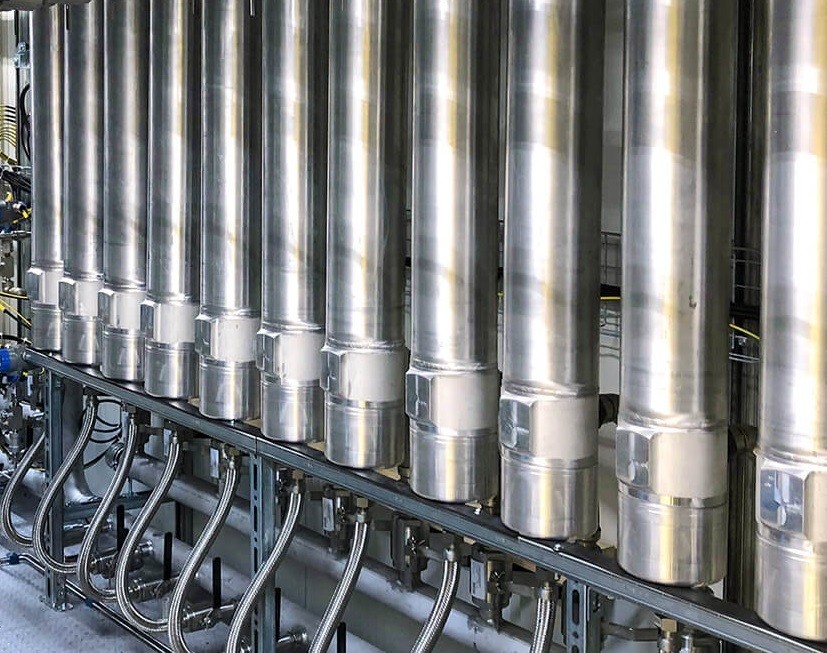
The Membrane-Based Biogas Purification System is a state-of-the-art gas separation solution used to upgrade raw biogas into high-purity Bio-CNG (up to 99% CH₄).
This technology uses selective polymeric membranes that allow CO₂, H₂S, and moisture to permeate while retaining methane – ensuring high recovery and superior gas quality.
TECTIKO membrane systems are fully modular, chemical-free, and ideal for small to large-scale CBG plants under SATAT, MNRE, and CGD integration projects.
Key Features
- CH₄ Purity up to 96–99%
- High methane recovery (up to 98%)
- No chemicals, no water, zero discharge process
- Fully modular plug & play skid design
- Expandable capacity – add-on membranes
- Low maintenance – no moving internals
- SCADA / PLC-based automatic control
- Silent operation – no vibration-heavy equipment
Working Principle
- Raw biogas → Pre-treatment (H₂S + moisture removal)
- Gas passes through multi-stage membrane modules
- CO₂ permeates through membrane selectively
- CH₄-enriched gas exits as Bio-CNG grade methane
- Optional booster compression for bottling / grid injection
Parameter Specification
- Feed Gas Flow 50 – 5000 Nm³/hr
- Final CH₄ Purity 92% – 99%
- Methane Recovery 93% – 98%
- Operating Pressure 10–18 bar
- Pre-treatment Requirement <100 ppm H₂S, <2% moisture
- Membrane Type Hollow Fiber / Spiral Wound
- Automation PLC / SCADA remote monitoring
- System Footprint Highly compact skid
Applications
- Bio-CNG / CBG Production Plants
- City Gas Distribution Network Integration
- Automotive fuel (Compressed Biomethane)
- LPG replacement in industries
- Boiler & furnace fuel gas supply
Benefits
- Eco-friendly (No chemicals, no water)
- Lowest operational cost vs. PSA/VPSA
- Better selectivity = higher CH₄ output
- No wastewater treatment required
- Very low maintenance & long membrane life (7–10 years)
- Can operate in fully automatic mode 24×7
- Modular – easily expandable for future capacity